Why Ecstatic Dance Builds Such a Fierce Sense of Community (And How to Find Your Tribe)
Ecstatic dance creates surprisingly deep community bonds. Here's the real reason strangers become soul family on the dance floor — no small talk required.
 ▶ See upcoming dances
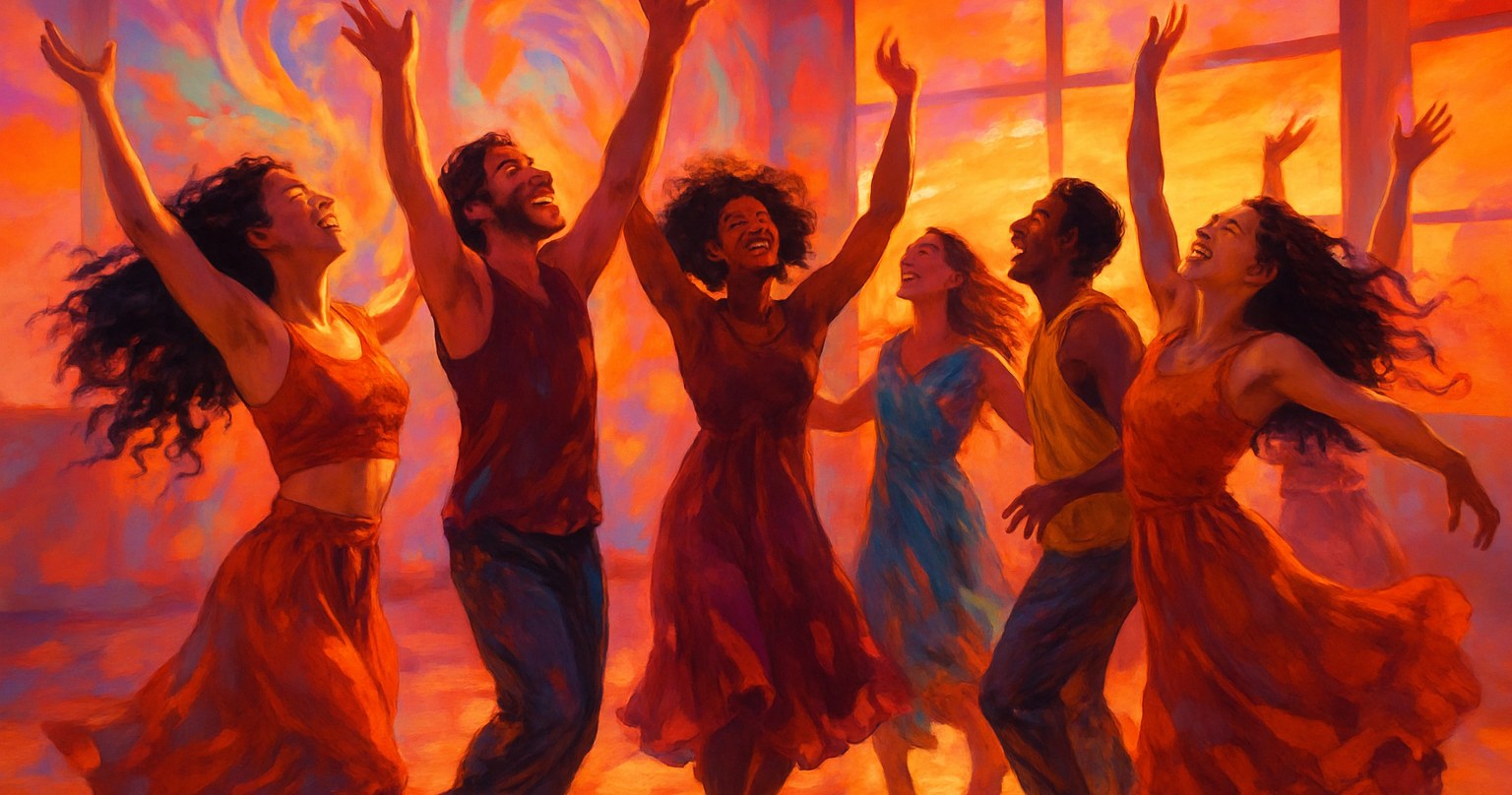
Walk into an ecstatic dance for the first time and you might think: these people all know each other. The way they move together, the hugs after the music fades, the easy laughter in the cool-down circle — it looks like a reunion. Here's the thing: half of them probably met on this exact floor, doing exactly this, just a few sessions ago. Ecstatic dance community bonds form fast, run deep, and tend to stick around long after the bass drops. So what is actually happening in that room?
Why Does Moving Together Feel So Bonding?
Your body is doing something profound when you dance in a room full of people: it's synchronizing. Research on rhythmic movement consistently shows that when humans move in time with one another — even loosely, even without touching — their nervous systems start to mirror each other. Heart rates inch closer. Breathing patterns align. The brain releases oxytocin, the same neurochemical that floods your system when you hug someone you love.
This isn't metaphor. It's physiology. And ecstatic dance turns the dial up on this effect because there's nothing diluting it — no alcohol numbing the signals, no screens splitting your attention, no rigid choreography bossing your body around. You're just there, in full sensation, with other humans doing the same. The result feels a little like falling in love with a room full of strangers. Gently. Weirdly. Wonderfully.
Why Is Nobody Talking — And Why Does That Actually Help?
The signature rule of ecstatic dance — no talking on the floor during the dance — sounds antisocial until you experience what it actually does. When words are off the table, the usual social performance goes with them. Nobody is crafting a witty first impression. Nobody is networking. Nobody is pretending they're having a better time than they are.
What fills that silence is pure nonverbal honesty. You see someone cry-dancing through something heavy. You see someone else dissolve into helpless giggles at their own flailing. You see people be awkward, be wild, be tender — and you're seen that way too. By the time the music fades and voices come back, you've already bypassed every social layer that normally takes months to peel. The small talk afterward is warmer, the eye contact more real, the sense of "I already know you somehow" completely earned.
What Makes the Community Feel Safe Enough to Actually Show Up?
Community only works when people feel they can be themselves without consequence. Ecstatic dance spaces tend to be deliberately structured to protect that feeling. A few things make the difference:
- Consent culture on the floor. A hand on heart means "not right now" — and everyone knows it. This simple shared language makes the space feel navigable even for newcomers.
- No phones during the dance. You're not being photographed. You can look ridiculous. You can fall apart. It stays in the room.
- Facilitation and opening circles. Many ecstatic dance events begin with a facilitator grounding the room — setting intentions, reviewing the guidelines, sometimes leading a brief breathwork or movement warm-up. This creates a container before the free dance begins, which tells your nervous system: this is a held space, not a free-for-all.
- Repetition builds trust. The more you show up, the more familiar faces accumulate. Community isn't a one-night phenomenon; it compounds over time.
If you're curious about where to find spaces like this, this guide to ecstatic dance in Sedona covers the local options worth knowing about.
Does the Music Actually Matter for Community?
Oh, absolutely. A skilled DJ doesn't just play songs — they arc the room through an emotional journey together. The build from grounding, earthy rhythms into peak euphoria and back down into tender, spacious closing music means the whole room experiences a shared emotional narrative. You all went somewhere together. You came back together. That's the structure of every meaningful ritual humans have ever done, and it lands in the body whether your brain registers it consciously or not.
When the closing song plays and you're lying on the floor next to total strangers, all of you breathing hard, some of you crying, some of you grinning at the ceiling — you've been through something together. That shared journey is the seedbed of real community.
How Quickly Can You Actually Feel Like You Belong?
Faster than you'd think — and slower than you might want. Some people walk into their first ecstatic dance and feel immediately at home, like they've found their people. Others need three or four sessions before the unfamiliarity settles and the belonging starts to bloom. Both are normal. The floor rewards return visits.
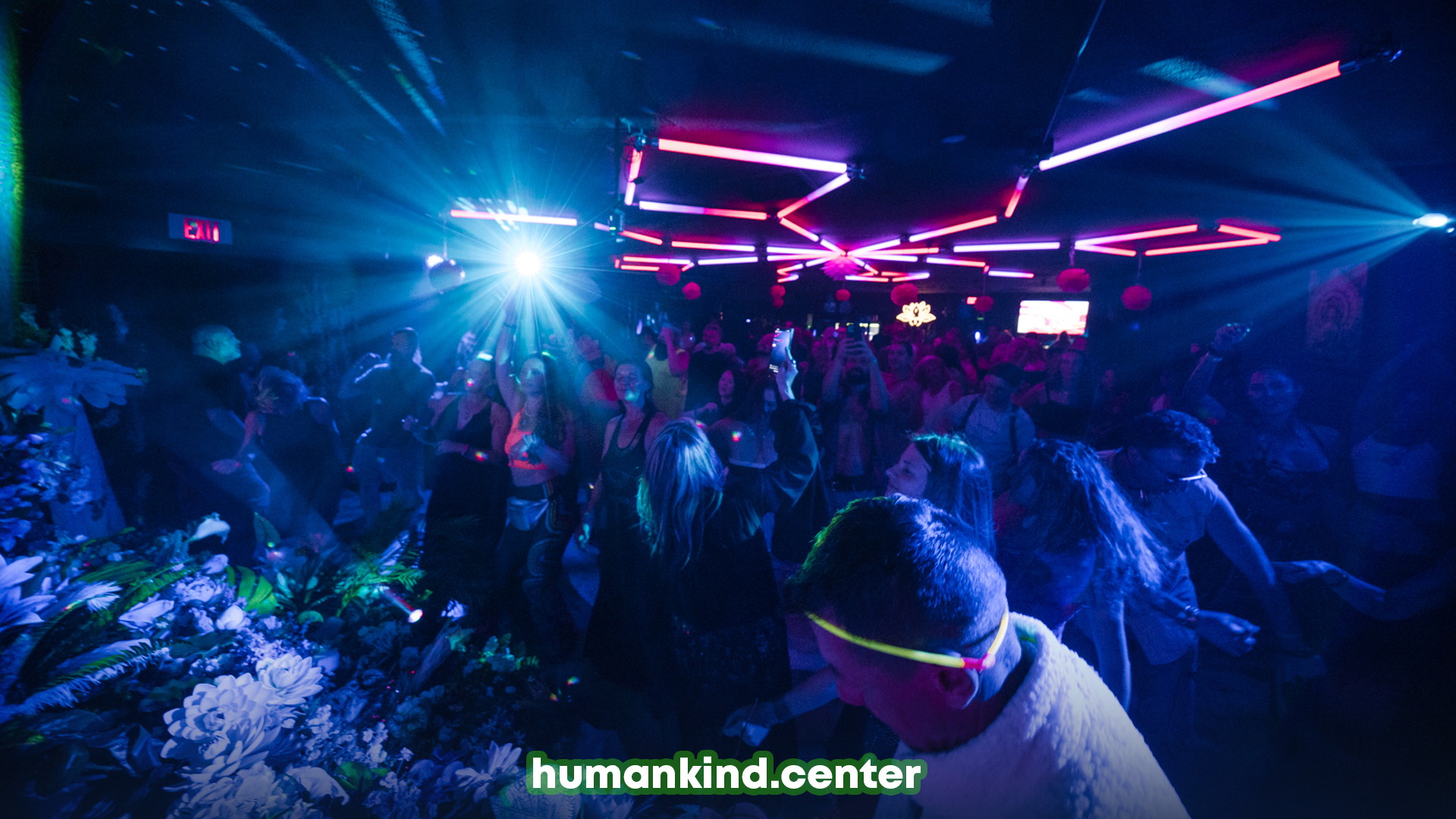
At humankind's ecstatic dance nights in Sedona, you'll find a room that already has that lived-in community warmth — regulars who welcome newcomers without making a production of it, and a facilitated container that helps first-timers find their footing. Show up once just to see. Show up twice and notice what's shifted.
Ultimately, what makes ecstatic dance community so surprisingly fierce is this: you weren't performing for each other. You were just — finally, briefly, completely — yourselves. And it turns out that's more than enough to build something real on.
Dance with us at humankind
Sedona's biggest conscious dance floor — ecstatic dance, DJs, and dance parties at humankind, all ages welcome.
Can't make it in person? Every event streams live and on demand in the humankind app.