Opening and Closing Circles: Why Ecstatic Dance Begins and Ends Together
Ever wondered why ecstatic dance starts and ends in a circle? Here's the real reason these rituals matter—and why skipping them feels like leaving a party mid-hug.
 ▶ See upcoming dances
If you've ever walked into an ecstatic dance opening and closing circle ritual for the first time and thought, wait, we're doing what before the dancing starts?—you are not alone. Standing in a ring of strangers, breathing together before a single beat has dropped, can feel somewhere between deeply meaningful and mildly awkward. And then the music kicks in and you forget all about the awkward part. By the time the closing circle rolls around, you're a little sweaty, a little blissed, and suddenly that ring of people doesn't feel like strangers at all. So what's actually happening in those bookend moments, and why do ecstatic dance communities around the world protect them so fiercely?
Why does ecstatic dance start with a circle instead of just… starting?
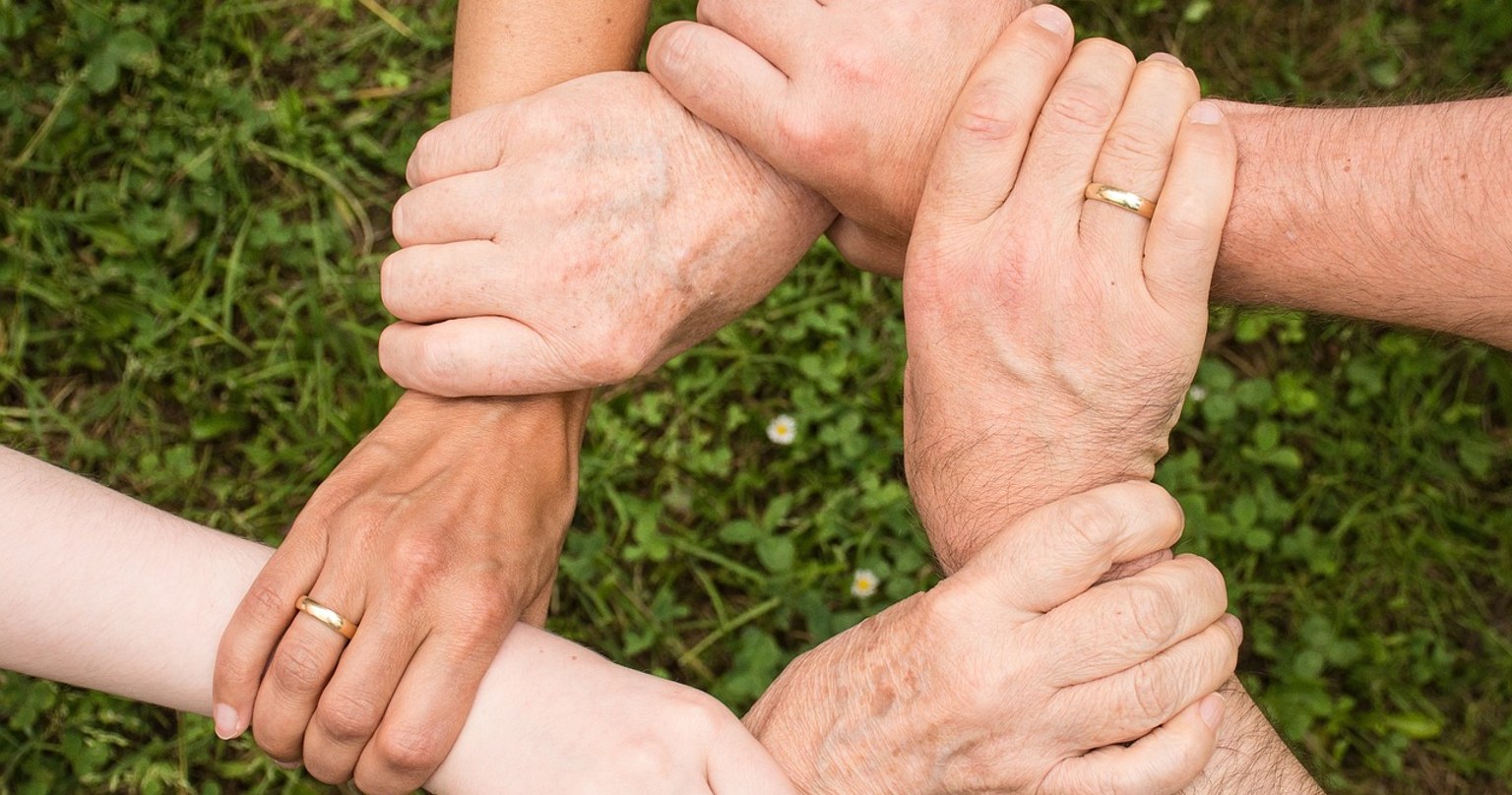
The short answer: because a room full of people moving freely is not the same thing as a community moving freely. The opening circle is the moment those two things become one.
Ecstatic dance is built on the idea that the dance floor is a shared space—not a stage, not a gym, not a club. When a facilitator or DJ gathers everyone into a circle before the music begins, they're doing something deceptively simple: they're asking everyone to arrive at the same time. Not physically (you're already there), but mentally and energetically. You close your eyes for a breath. You notice your feet on the floor. You hear the same words your neighbor hears. And suddenly you're not sixty individuals staring at your phones—you're a temporary little village that has agreed, wordlessly, to look out for each other for the next two hours.
Most opening circles include a few practical things too: a reminder that this is a no-alcohol, no-phones, low-talking space; an invitation to move however feels right; maybe a short body-scan or collective breath led by the facilitator. None of it takes long. All of it matters.
Why is nobody talking during ecstatic dance—and when did that get decided?
The "low or no talking" guideline is almost always introduced in the opening circle, and for good reason: if it surprises you mid-dance, it's confusing. If you heard it five minutes ago in community, it makes total sense.
The opening circle is where the agreements live. Different events have slightly different flavors—some are more structured, some are a single deep breath and a bell—but they all serve the same function of setting the container. Ecstatic dance events in Sedona and everywhere else use the opening circle to make sure everyone is playing the same game before the music makes conversation irrelevant anyway.
What actually happens in the closing circle—and why does it feel so necessary?
Here's a thing that surprises first-timers: the closing circle often hits harder than the opening one.
By the time the music winds down, you've been through something. Maybe you cried during a slow song. Maybe you laughed so hard during a peak moment that strangers laughed with you. Maybe you just moved for two hours without once checking a notification, which in itself is practically a mystical experience these days. Whatever happened, it happened in community—and the closing circle is how you acknowledge that before you walk back into the parking lot and your regular life.
Closing circles vary widely. Some involve a word or phrase passed around the ring. Some are just a collective "ahhh" exhale and a bow. Some include a brief share-out where anyone who wants to can name something they're grateful for. The format matters less than the function: you are landing together, the same way you launched together.
Skipping the closing circle—ducking out early while the last song is still fading—is a little like leaving a dinner party while dessert is being served. You can. But you'll probably feel the incompleteness of it later.
What if I'm shy, new, or deeply suspicious of group rituals?
Welcome. You're in good company, and nothing in the circle requires you to perform anything.
The beautiful design of most ecstatic dance circles is that presence is the only requirement. You don't have to share, hug, make eye contact, or say a single word. You just have to be there, standing in the ring, which is already the whole thing. First-timers often report that the opening circle is the moment they relaxed enough to actually enjoy the dance—because someone said the quiet part out loud: this is a safe space, here are the simple rules, we're all here together.
- Arrive a few minutes early so you don't walk in mid-circle
- Find a spot in the ring and just breathe—no performance necessary
- If sharing is invited, a simple nod or a one-word check-in is always enough
- Stay for the closing circle if you possibly can—it genuinely changes how the experience settles in your body
How do different ecstatic dance communities handle their circles differently?
There's no global rulebook, which is part of what makes ecstatic dance culture so alive. Some communities are highly ceremonial—opening with sage, a bell, a longer guided meditation. Others are minimal: thirty seconds of silence, a breath, and then the music. Big city events with hundreds of dancers often keep circles brief out of sheer logistics. Smaller, more intimate gatherings might spend ten or fifteen minutes in genuine community check-in.
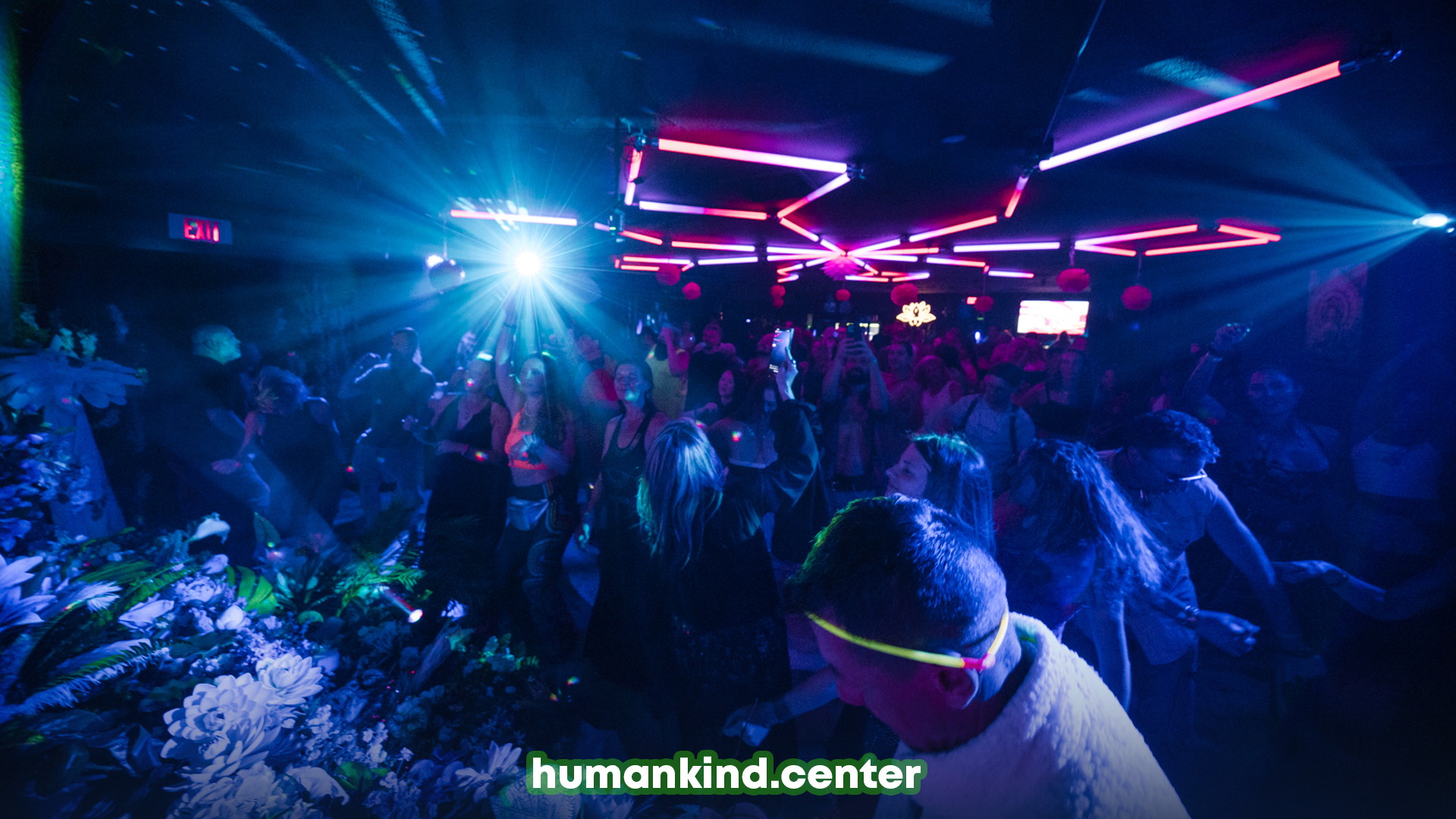
The dance nights at humankind in Sedona tend to carry that warm, high-desert intimacy—the kind of opening circle where you can actually feel the vortex energy (or at least the collective exhale) before the bass drops. Whatever the format, the intent is the same everywhere: mark the threshold. Cross it together. Come back together when it's done.
The circle is, in a way, the whole point. The dance is magnificent and wild and it belongs to you entirely. But the circle at the beginning and end? That's the part that belongs to all of you. And that distinction—between my dance and our dance—is exactly why ecstatic dance feels different from every other way you could spend two hours moving your body. Don't skip the bookends. They're holding the whole story together.
Dance with us at humankind
Sedona's biggest conscious dance floor — ecstatic dance, DJs, and dance parties at humankind, all ages welcome.
Can't make it in person? Every event streams live and on demand in the humankind app.