How an Ecstatic Dance DJ Crafts a Musical Journey (And Why Your Body Already Knows the Map)
Ever wonder what your DJ is actually doing up there? Here's how ecstatic dance DJs build a wave that takes your whole body on a ride.
 ▶ See upcoming dances
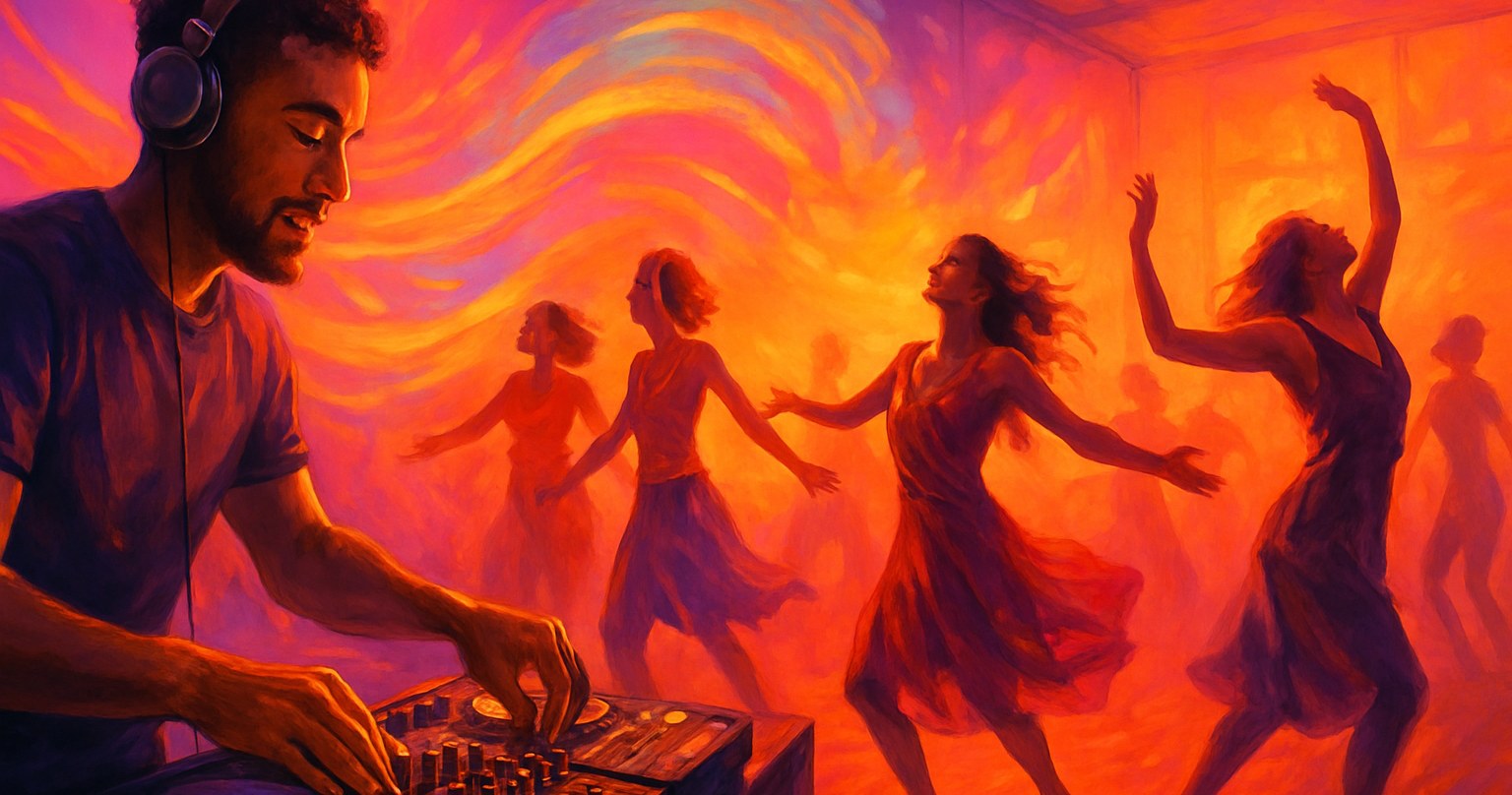
You walk onto the floor, the bass is low and warm, something with a hand drum and a hint of birdsong is threading through the speakers, and your hips start doing a thing before your brain even clocks in. That's not an accident. The person behind the decks — headphones half-on, eyes half-closed — is doing something way more intricate than hitting shuffle on a good playlist. Understanding how an ecstatic dance DJ creates a musical journey is basically understanding why this practice is so reliably, almost sneakily, transformative.
What Exactly Is "The Wave" — And Why Does It Matter?
Ask any experienced ecstatic dance DJ and they'll mention the wave before you finish your question. The wave is the backbone of every session: a deliberate arc of energy that moves from opening stillness, through building momentum, to a full-body peak, and back down to a quiet, integrated close. Think of it like a breath — inhale, hold, exhale — stretched across 90 minutes to two hours of music.
The wave isn't arbitrary. It mirrors patterns the body already trusts: the rhythm of sleep cycles, the build and release of emotion, the natural cadence of exertion and rest. A skilled DJ uses it to create a container that feels safe enough for your nervous system to actually let go. That's the whole trick, really — not just playing great tracks, but making the body feel held by the structure of the journey even when the mind has no idea where it's going.
How Does a DJ Actually Build That Journey, Track by Track?
Most ecstatic dance DJs arrive with what you might call a felt map rather than a fixed setlist. They know the emotional territory they want to move through, they've curated a library of music organized loosely by energy level and texture, and then they read the room in real time.
The opening phase is all about invitation. Tempos tend to be slow, melodies are spacious, rhythms are gentle enough to draw people inward. This is where tension melts out of shoulders and people stop performing and start actually arriving in their bodies. A DJ who rushes this phase loses the whole room — people never fully land.
From there, energy is layered in gradually. Beats get crisper, bass gets more insistent, polyrhythms start stacking. Vocals might appear. The music starts asking more of the body — not demanding, just offering. By the time the set reaches its peak, there's often a kind of collective electricity on the floor: strangers moving in loose synchrony, laughter erupting, tears happening right next to euphoria.
Then the descent. This is arguably the most underrated part of the DJ's craft. Coming down too fast is jarring; coming down too slowly loses the thread. A thoughtful close creates space for integration — the body gets to digest what just happened, emotions settle, and dancers land back in themselves feeling genuinely different than when they walked in.
What Genres and Sounds Do Ecstatic Dance DJs Actually Use?
Genre labels barely apply here, which is part of what makes ecstatic dance music its own universe. You might hear:
- Tribal and world percussion — djembe, tabla, frame drum, didgeridoo
- Downtempo and deep house electronics woven with organic textures
- Ambient soundscapes and drone — especially useful in opening and closing
- Sacred or devotional vocal music from various traditions
- Live-looped instruments or improvised elements layered into the mix
- Unexpected surprises — classical strings, birdsong, cinematic swells, the odd pop song stripped and rebuilt
The through-line is never genre — it's intention. Every choice is made in service of where the body is in the wave at that moment. A track that would sound jarring in isolation might crack a room wide open at minute 47 of a set, purely because of what led up to it.
Why Is Nobody Talking During the Music — Is That a Rule?
Not a rule, exactly — more like a collective agreement that protects the journey. Conversation pulls the thinking mind back online, and the whole point of the DJ's careful architecture is to give the thinking mind a little vacation while the body takes the wheel. When the room stays wordless, the music becomes a shared language everyone is speaking simultaneously through movement. It's surprisingly intimate, in the best way.
Most ecstatic dance spaces hold a talking space outside the dance floor — a chill zone where you can decompress, connect, and use your words again. Local ecstatic dance venues in Sedona typically follow this same structure, so newcomers always have a soft landing outside the floor.
Does the DJ Ever Take Cues From the Dancers?
All the time — this is where the magic lives. A great ecstatic dance DJ is in ongoing nonverbal dialogue with the floor. If the room is crackling with energy, they'll hold the peak longer. If people look glassy or scattered, they might shift the texture completely, introduce something unexpected, or pull the energy back and rebuild it from a different angle. There's real-time intuition involved that no algorithm can replicate.
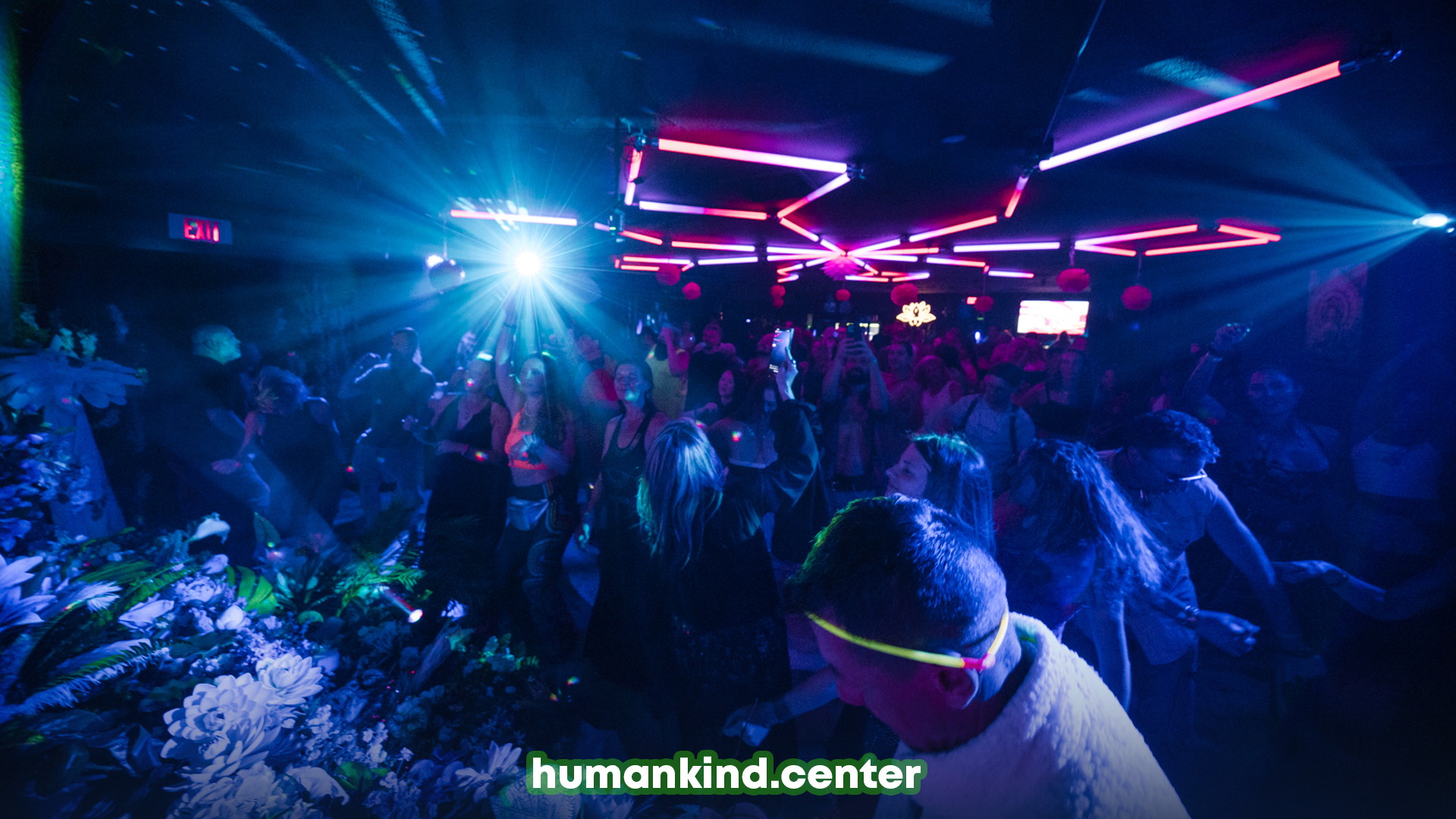
This is one reason why showing up live to a curated ecstatic dance night hits differently than dancing to a recorded set at home. The DJ is playing for you, right now, in response to what your collective body is doing. At humankind dance nights here in Sedona, that live responsiveness is palpable — you can feel the DJ feeling the room, and the room feeling it back.
So next time you show up and feel that low opening pulse pulling something loose in your chest before you've even taken off your shoes — say a little thank-you to the human at the decks who built the on-ramp just for you.
Dance with us at humankind
Sedona's biggest conscious dance floor — ecstatic dance, DJs, and dance parties at humankind, all ages welcome.
Can't make it in person? Every event streams live and on demand in the humankind app.