First-Time Ecstatic Dance Nerves: What Actually Happens in Your First Hour on the Floor
Sweaty palms before your first ecstatic dance? Here's a minute-by-minute look at what really goes down — and why your body already knows what to do.
 ▶ See upcoming dances
So you've heard about ecstatic dance — maybe a friend raved about it, maybe the algorithm served you a video of people swirling with their eyes closed, maybe you stumbled onto a local Sedona guide and something in your chest went yes, but also absolutely not. That mix of curiosity and mild terror? That's the exact right starting point. Let's walk through what your first hour actually looks like, minute by messy, magical minute.
What Do I Wear — And Will I Look Ridiculous?
Here's the dress code: comfortable. That's it. That's the whole list. Most people show up in the kind of outfit they'd wear to yoga, a farmers market, or a dance party in their own kitchen — flowy pants, a soft tee, layers they can peel off as things warm up. The vast majority of dancers go barefoot, so the shoes come off at the door. No heels, no performance gear, no pressure. If you're overthinking your outfit, you're already overthinking this — which, for the record, is extremely normal and you're doing great.
Why Is Nobody Talking? Did I Walk Into Something Weird?
The no-talking guideline on the dance floor is probably the thing that surprises first-timers the most. You walk in, there's music playing, bodies are moving, and nobody is chatting. It can feel intensely strange for about four minutes. Then something shifts. When words are off the table, you stop performing social normalcy and start actually arriving in the room. Eye contact becomes warmer. A stranger's grin across the floor lands differently. Your own head gets quieter.
Most events have a brief opening circle or orientation before the music really drops — this is where the facilitator covers the guidelines (no talking, no phones on the floor, no unsolicited touch, everyone moves at their own pace). Pay attention here. It sets the whole container. Then the DJ starts weaving the first low, slow opening beats, and the floor becomes yours.
What Do I Actually Do With My Body for the First Twenty Minutes?
Honestly? You'll probably sway a little. Maybe shift your weight from foot to foot. Maybe feel like an absolute golden retriever who doesn't know what to do with their paws. This is the universal first-timer experience and it is, we promise, endearing rather than embarrassing — because everyone else is in their own world.
A few things that help in those early minutes:
- Start with your feet. Just notice the floor. Let your knees soften. You don't need to "dance" yet — swaying counts, breathing counts, standing and listening counts.
- Follow the music, not the room. The DJ is doing all the heavy lifting. Let the sound tell your body what it wants to do next.
- Find a corner or an edge. Plenty of first-timers hug the perimeter at first. There's zero shame in this. The middle of the floor will call you when it's ready.
- Close your eyes. Even for thirty seconds. The self-consciousness drops dramatically when you stop watching yourself being watched.
The music in most ecstatic dance sets builds intentionally — starting slow and meditative, rising through mid-energy grooves, cresting into something that makes it genuinely hard to stand still, then slowly descending again into stillness. By the time the beat really opens up, most people have completely forgotten they were nervous.
What If Someone Tries to Dance With Me and I Don't Want That?
Good news: ecstatic dance culture is built on consent and autonomy. Nobody should be grabbing your hand or pulling you into anything. Connection happens through eye contact and mutual invitation — if someone drifts near you and the energy is good, you might naturally orbit each other for a minute. If you want none of that, a gentle turn away or a hand to your own heart is understood perfectly. You never owe anyone your dance.
At events like the ones hosted at humankind in Sedona, the space is held with clear community agreements — which means you can actually relax into your own experience rather than bracing against awkward social navigation.
What Will I Feel Like When It's Over?
Tired in the good way. Lighter. A little blissed out. Possibly like you want to sit on the floor and stare at the ceiling for a while, which — highly recommend, zero judgment. Most sessions close with a landing period: slower music, a chance to stretch or lie down, maybe a closing circle. Don't skip this part. It's the difference between leaving feeling wrung out and leaving feeling integrated.
A lot of first-timers report feeling slightly speechless afterward, like they processed something they didn't have words for. Others want to talk about it immediately to anyone who will listen. Both are correct responses. Some people cry. Some people laugh. Some people sit quietly and eat a snack and feel profoundly okay.
The one thing that almost never happens? People leave wishing they hadn't come. The first hour is the hardest part, and it's not even that hard. Your body has been waiting for an excuse to do this. Give it one.
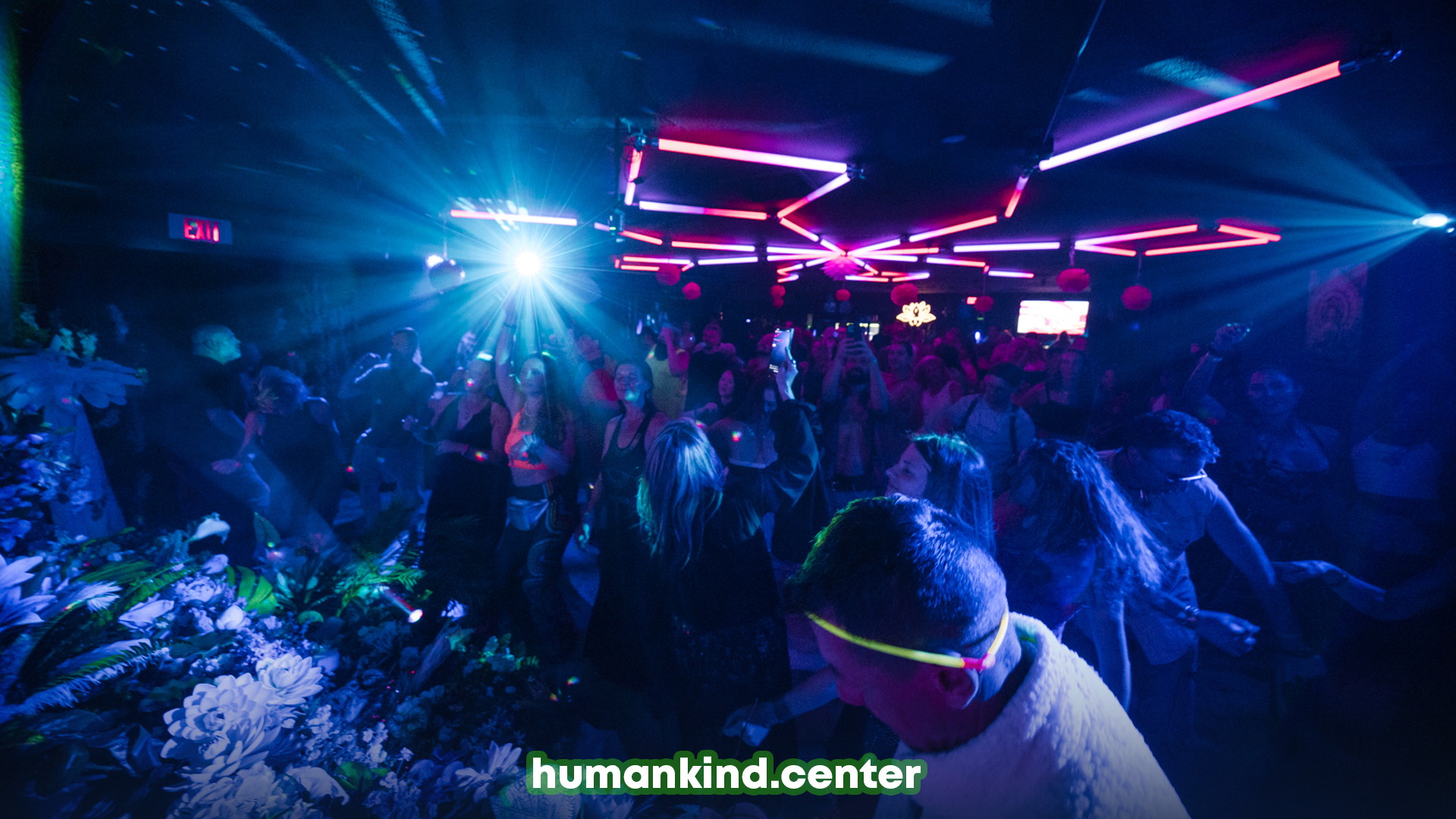
Dance with us at humankind
Sedona's biggest conscious dance floor — ecstatic dance, DJs, and dance parties at humankind, all ages welcome.
Can't make it in person? Every event streams live and on demand in the humankind app.