Partner Dancing at Ecstatic Dance: How to Find, Invite, and Flow with Someone Else's Body
Nervous about dancing with another person at ecstatic dance? Here's how connection, consent, and co-movement actually work on a free-form floor.
 ▶ See upcoming dances
You're deep in a song, the floor is alive, and suddenly someone drifts into your orbit — eyes soft, body open, moving in a way that makes your spine want to respond. What do you do? Partner dancing at ecstatic dance is one of the most exhilarating, occasionally nerve-wracking, and genuinely magical dimensions of the whole practice. And yet almost nobody talks about how it actually works. This is that conversation.
How Do You Even Know Someone Wants to Dance Together?
Forget everything you know about club pick-up culture and ballroom etiquette — neither applies here. On a free-movement floor, the invitation language is almost entirely physical and energetic. Someone who wants to share space will usually make it obvious: they'll move closer, hold eye contact a beat longer than strangers do, or simply mirror what your body is doing from a few feet away.
That mirroring is the secret handshake. When two people start unconsciously copying each other's rhythms — tilting when the other tilts, reaching when the other reaches — the body has already said yes before the mind has caught up. Trust that. The floor communicates faster than words ever could.
The flip side is equally readable. If someone closes their eyes, turns away, or pulls inward, they are not being rude. They're in their own world, and that world is sacred. Leave them there without a second thought. The willingness to let a "no" be quiet and clean is exactly what makes the floor feel safe enough for all those joyful "yeses."
What Does Partner Dancing at Ecstatic Dance Actually Look Like?
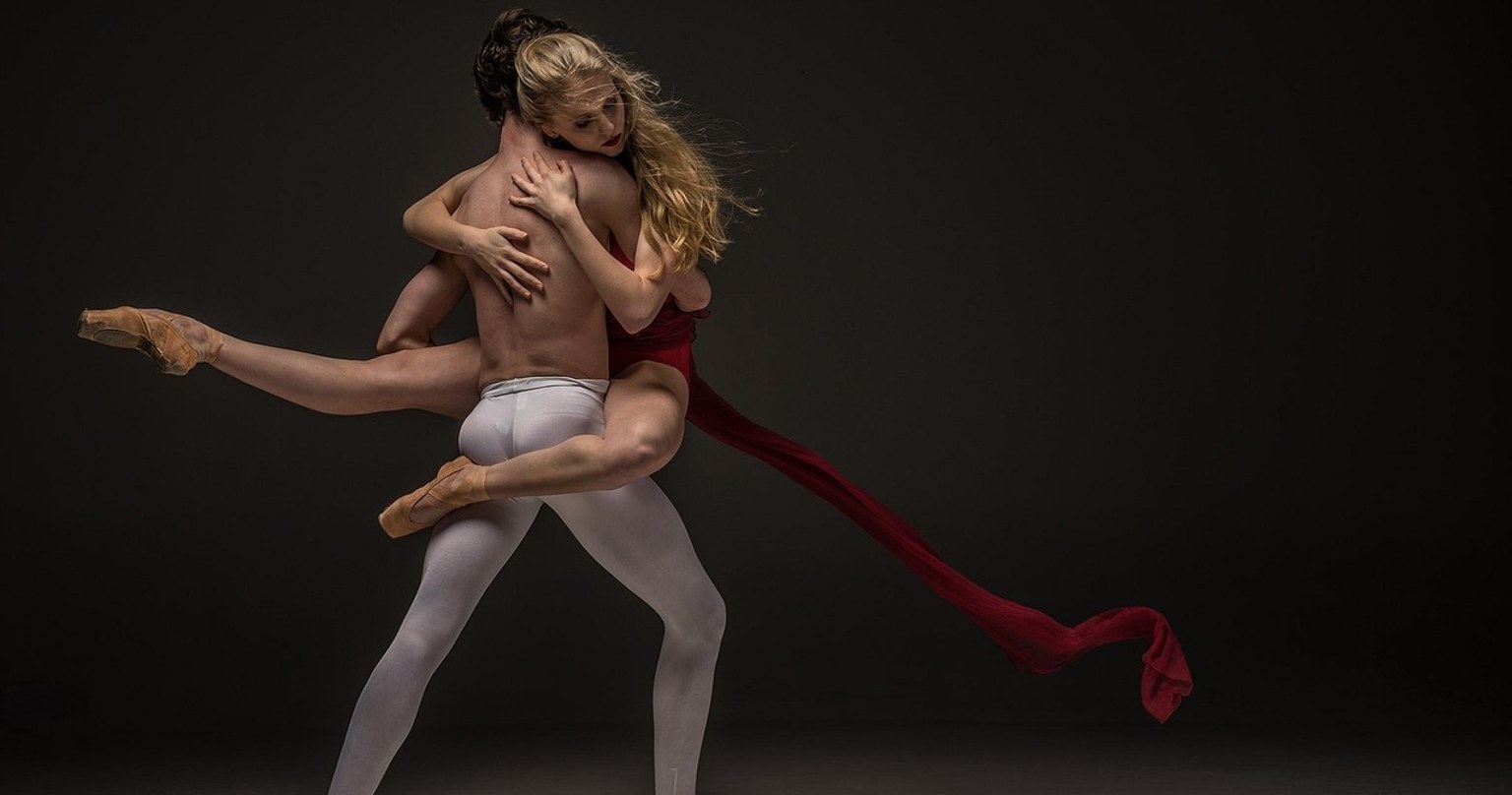
Here's the range, because it is wide. At the gentlest end, two people are simply aware of each other — orbiting, never touching, feeding off the other's energy like two flames sharing the same draft. That counts. That can be electric.
Moving up the dial: a momentary hand clasp, a shoulder lean, a full 360-degree spin that separates as naturally as it began. Further still: a sustained improvisational duet that lasts a whole song, trading weight, following impulse, building something neither person planned. At every point along this continuum, the guiding principle is the same — you follow sensation, not choreography. There are no steps to get right.
What you won't typically find is grinding, lifts without clear permission, or any movement that prioritises the visual over the felt. The question is never how does this look? It's always how does this feel?
What If I Want to Stop Mid-Song — Or Mid-Dance?
This is the question people most need answered and least often ask out loud, so let's be direct: you can leave at any time, with zero explanation. The exit moves are simple — close your eyes and go inward, take a step back, turn your body toward empty space, let your arms drift away from theirs. Every one of these is a universally understood signal in conscious dance culture.
A dancer who is truly present will honour your transition without flinching. If someone gives you a confused look when you disengage, that's their work to do, not yours. You owe no one a full song. You owe no one a reason. The same freedom that lets you stay in a beautiful duet for ten minutes is the freedom that lets you leave after ten seconds. Both are correct.
Can Partner Dancing Work if I'm an Introvert — or Just Shy?
Yes, and honestly, introverts often thrive here because the whole exchange is wordless. There's no small talk, no awkward opener, no explaining yourself. You just… move. The body takes over and the social brain gets a well-earned rest.
If the thought of initiating still feels like too much, try the simplest possible version: just dance near someone whose energy appeals to you. Not close enough to suggest anything, just close enough to feel the shared field. Sometimes that's the whole thing. Sometimes it blooms into something more. Either way, your nervous system gets a taste of genuine human resonance without any of the social overhead.
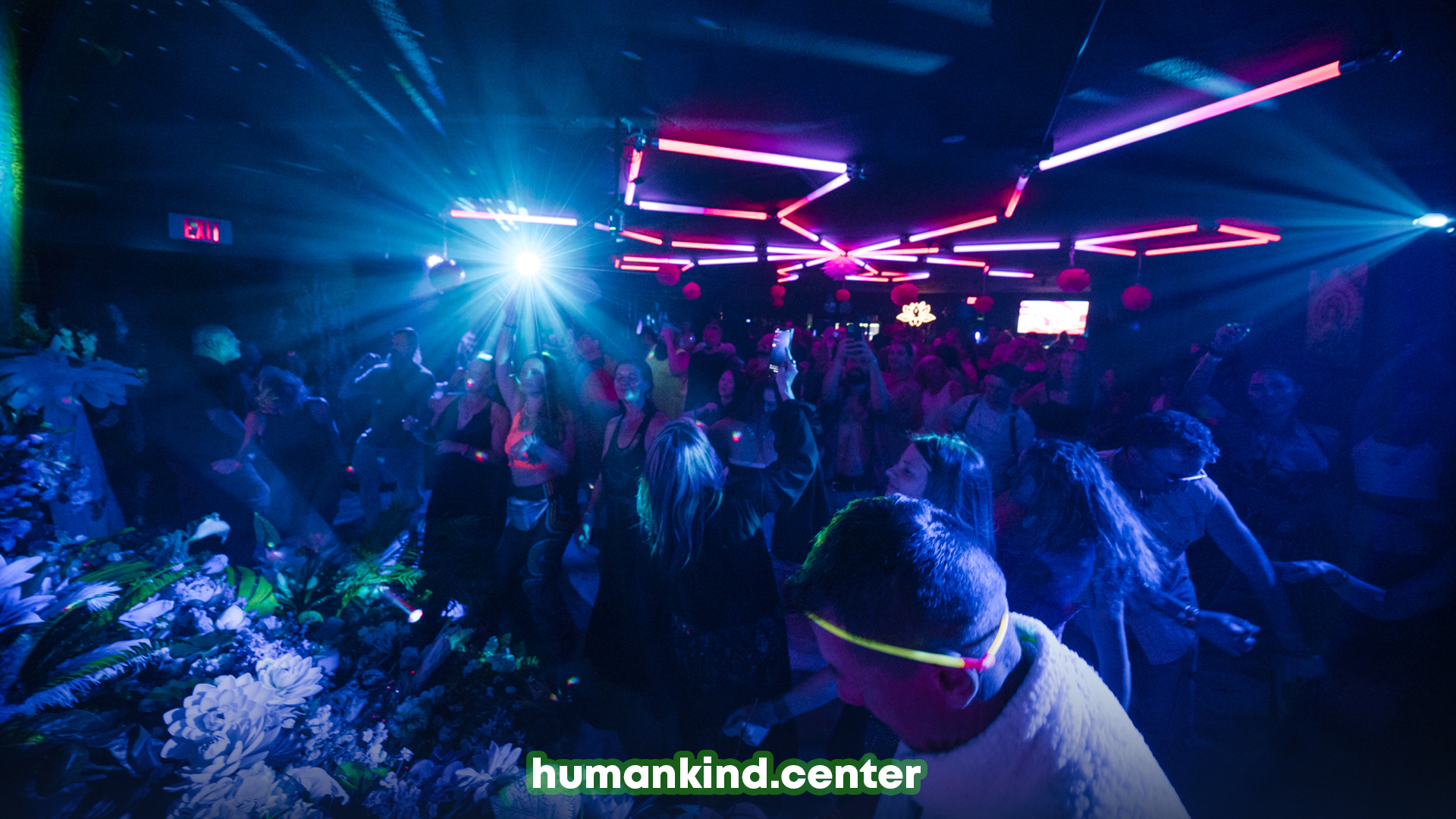
At humankind dance nights in Sedona, the floor tends to have a beautiful mix — solo dancers, duets, clusters, people who cycle between all three in a single evening. There's room for every style of showing up, and the Sedona scene overall carries that same generous, non-pressured vibe.
Does Dancing with Someone Mean Something — Like, Romantically?
Not automatically, and this is where ecstatic dance culture does something genuinely unusual. Because touch and closeness are stripped of their usual social scripts, a profound five-minute duet can be exactly what it is — a beautiful moment of human connection — without it being a prelude to anything else. This can feel disorienting at first if you're used to environments where close dancing carries a clear subtext. It can also feel like an enormous relief.
The practice teaches you to meet connection as connection, full stop. Some of the most moving dances happen between strangers who never learn each other's names. Some happen between friends who discover something new about how the other person exists in their body. What it means, if anything, is between you and that moment. The floor doesn't have an agenda. Neither should you.
So the next time someone drifts into your orbit with that soft, open gaze — stay curious. Your body already knows what to do next.
Dance with us at humankind
Sedona's biggest conscious dance floor — ecstatic dance, DJs, and dance parties at humankind, all ages welcome.
Can't make it in person? Every event streams live and on demand in the humankind app.