Ecstatic Dance Across a Lifetime: Why Every Age Gets a Different Gift from the Floor
Your twenties, forties, sixties — the floor meets you exactly where you are. Here's how ecstatic dance shifts (and deepens) as your body changes over time.
 ▶ See upcoming dances
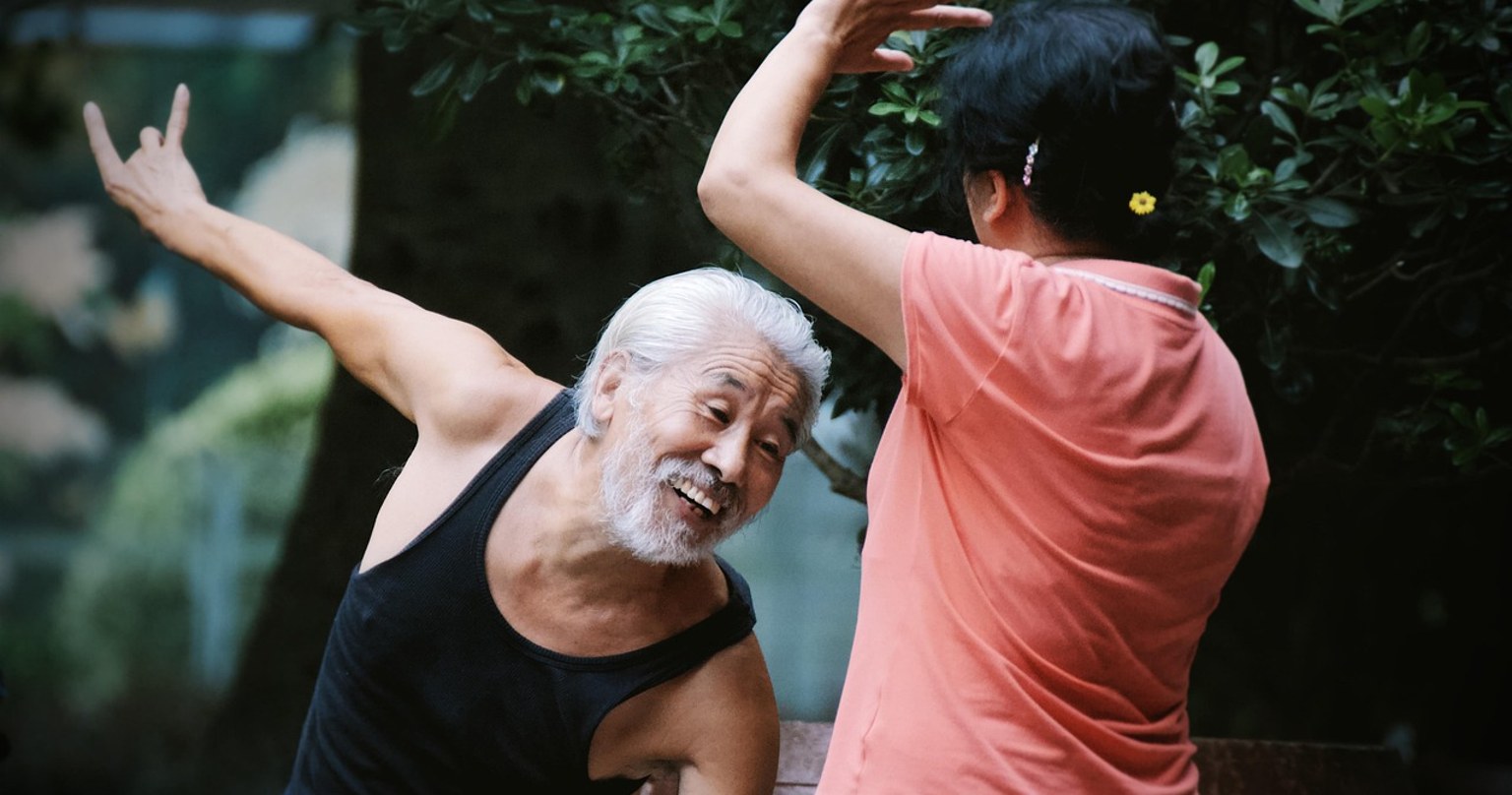
There's a quietly radical thing about ecstatic dance across a lifetime: the floor doesn't have a preferred age. It doesn't reward youth, penalize gray hair, or hand out bonus points for the supplest hips in the room. What it does — reliably, mysteriously — is give each decade something different. Something that fits. If you've ever wondered whether the practice has a shelf life, the short answer is no. The longer answer is way more interesting.
What does ecstatic dance feel like in your twenties and thirties?
For most people who discover the practice young, the first gift is permission. Permission to move without choreography, without an audience's approval, without the social calculus that dominates every other dance context. The body in its twenties often wants to go — big, fast, aerobic, loud — and a full-wave ecstatic dance set lets it do exactly that.
But this phase also tends to carry some noise. A lot of dancers in their twenties and thirties are still negotiating the gap between the body they have and the body they think they should have. The floor helps, but it takes time. You might spend a year going hard before you notice that the quieter moments in a wave — the slower, more internal passages — are asking for something you haven't quite given yet. That's the beginning of a longer conversation.
How does the practice shift in midlife?
Ask a room full of longtime dancers when their practice got really good, and a surprising number will point to their forties. Something settles in midlife. The need to look a certain way on the floor dissolves. The inner critic loses its frequency. What's left is a more honest dialogue with what's actually happening in the body — and that, it turns out, is the whole point.
Midlife also tends to bring grief, transition, role overload, and the particular exhaustion of being needed by everyone. Ecstatic dance becomes less of a party and more of a pressure valve — a place to metabolize what daily life doesn't have room for. The wave structure, which mirrors the arc of an emotional release, can feel almost therapeutic without trying to be. Many dancers in this phase describe the floor as the one hour in the week when they are entirely their own.
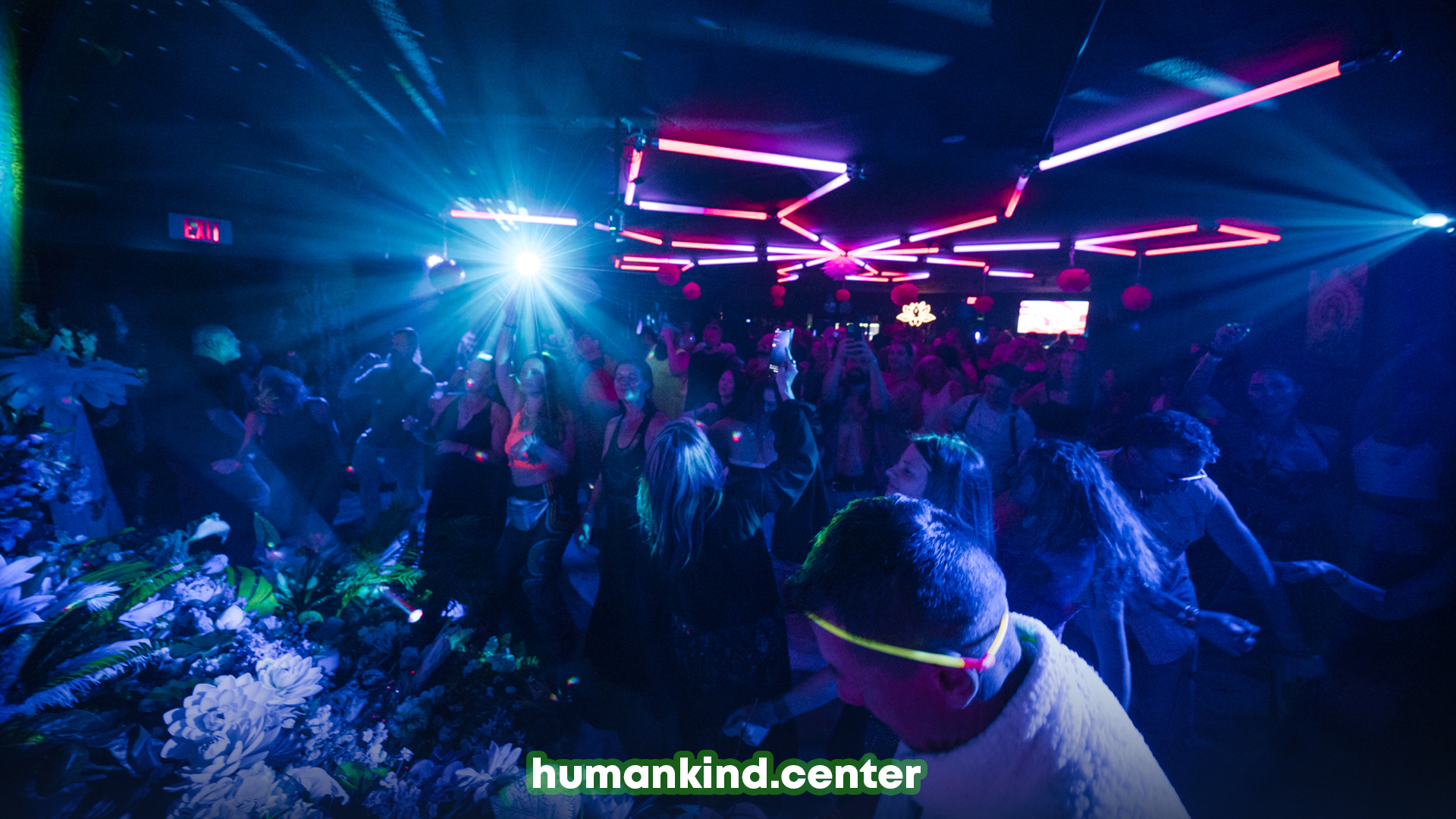
If you're in this season and looking for a floor in northern Arizona, the weekly events at humankind in Sedona draw a genuinely mixed-age crowd where nobody looks out of place at any point in the wave.
What happens to the practice when the body slows down?
Here is where it gets genuinely surprising. Many dancers in their sixties, seventies, and beyond report that slowing down physically accelerated something inward. When you can no longer throw yourself across the room (or simply choose not to), the movement that remains becomes extraordinarily precise. A single gesture — one hand rising, weight shifting from heel to toe — can carry the same charge that a full-body leap carried decades earlier.
This is not a consolation prize. It's a different and arguably deeper form of the practice. Sensation becomes more available, not less, when the body moves slowly and consciously. Many experienced dancers say they feel more in a ten-minute slow groove at sixty than they did in an hour of maximum output at twenty-five. The floor just keeps giving.
- Micro-movement: Tiny shifts in weight, breath, and gaze become entire dances.
- Stillness as practice: Standing in full presence while sound moves through you is not resting — it is dancing.
- Seated exploration: Many communities fully welcome floor-level and chair-based movement; check in with the space you're visiting.
- Witnessing: Watching others move with genuine attention is its own form of participation and can be deeply nourishing.
Can you start ecstatic dance for the first time later in life?
Yes — and this deserves its own section because the assumption that you had to have discovered it young is completely wrong. Because ecstatic dance has no syllabus, no steps to learn, and no performance standard, the entry point is the same at sixty-five as it is at twenty-five: you show up, you move, the music holds you, the community surrounds you.
In fact, some people come to the practice later precisely because earlier life didn't have space for it. Children launched, careers wound down, the body finally audible after decades of being pushed through a schedule. That arrival can feel like the floor was waiting. Finding a local ecstatic dance scene is usually easier than newcomers expect, and the welcome is genuine regardless of when you walk in.
What does the long arc of a dance practice actually teach you?
The dancers who have been on the floor for decades tend to share one insight: the practice keeps changing you because it keeps changing. What felt like freedom at thirty feels like a warm-up conversation now. The parts of yourself you thought were too much, too broken, or too far gone get met, eventually, by the right wave at the right moment.
Bodies age. Ranges of motion shift. Injuries leave their signatures. And through all of it, the floor asks the same question it always did: What wants to move right now? The answer is different every time, at every age. That's not a limitation of the practice. That's the whole beautiful point.
Dance with us at humankind
Sedona's biggest conscious dance floor — ecstatic dance, DJs, and dance parties at humankind, all ages welcome.
Can't make it in person? Every event streams live and on demand in the humankind app.