Dance Your Feelings: What Free Movement Does to Your Nervous System (And Why It Feels So Good)
Free movement isn't just fun — it's biology. Discover what ecstatic dance actually does to your nervous system and why your body is begging you to try it.
 ▶ See upcoming dances
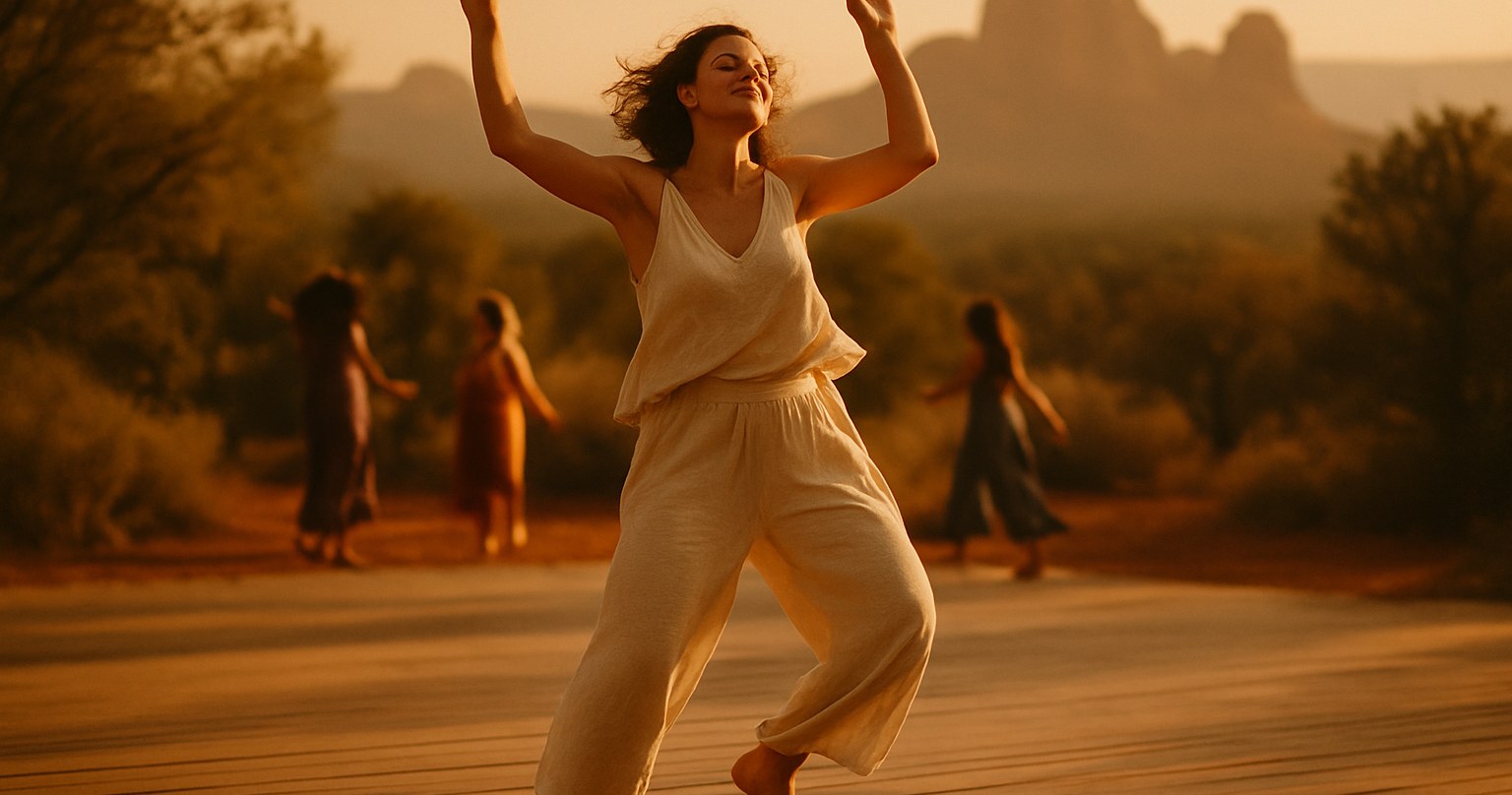
You've had one of those weeks. The kind where tension parks itself between your shoulder blades and refuses to leave. You've tried the deep breaths, the journaling, the chamomile tea. But what if the most effective thing you could do is also the most ridiculous-looking — just… dance it out? Not in a sad-shuffle-around-the-kitchen way. We mean full-body, eyes-closed, arms-doing-whatever-they-want ecstatic dance — the kind of free movement practice that your nervous system has quietly been begging for this whole time.
If you've been curious about what actually happens inside your body when you let yourself move without rules, you're in the right place. Let's get into the delicious science — and the even more delicious feeling.
What Is Actually Happening in Your Body When You Free Dance?
Here's the thing: your body stores emotion as physical sensation. Tension, grief, excitement, unprocessed stress — it all lives in the tissues, not just the thoughts. Free movement is one of the fastest ways to give that stored energy somewhere to go.
When you move rhythmically and without choreography, a few gorgeous things happen at once. Your brain starts releasing a cocktail of feel-good neurochemicals — dopamine, serotonin, endorphins — the same ones that show up during any sustained physical activity, but turbocharged by the emotional freedom that comes from moving however you want. At the same time, rhythmic movement directly stimulates the vagus nerve, the long wandering nerve that connects your brain to most of your major organs and acts as the master switch for your parasympathetic nervous system (the "rest and digest" side of things).
In plain language: you shake, you sway, you stomp — and your body starts to feel safe. The bracing softens. The jaw unclenches. Something you couldn't name starts moving through you and out of you. That's not woo. That's biology doing its job.
Why Does the No-Talking Thing Actually Help Your Brain?
If you've ever wandered into an ecstatic dance space and noticed that nobody's chatting, that's intentional — and the reason is deeply practical. Social conversation requires a specific kind of cognitive performance: tracking what you're saying, how you're coming across, what to say next. Your prefrontal cortex is running the show, and that part of your brain is terrible at letting you feel things fully.
The silence (or near-silence) in ecstatic dance drops you out of the social brain and into the sensing body. Without the need to perform or explain yourself, your nervous system gets the message: you are not being evaluated right now. That's when the real stuff can move. It's less a rule and more a trapdoor — straight down into the present moment, where all the good stuff lives.
Can Free Movement Actually Regulate Your Emotions?
Short answer: yes, and your body already knows how to do it. Watch a toddler process a big feeling — they shake, spin, flop dramatically onto the floor, and then they're fine. That impulse doesn't go away when we grow up; we just learn to override it. Ecstatic dance is essentially the adult permission slip to stop overriding.
From a nervous system perspective, movement helps complete what researchers sometimes call the stress response cycle. When we experience stress, our bodies gear up for action — heart rate rises, muscles tighten, adrenaline flows. But in modern life, we rarely get to physically complete that cycle. We sit with it. Dance finishes the sentence. The wave of activation rises, peaks, and rolls through — leaving the body genuinely calmer on the other side, not just distracted.
This is why people cry on the dance floor sometimes, or burst into unexpected laughter, or suddenly feel a grief they forgot they were carrying. The body found an exit. That's the practice working.
What Should I Expect at My First Ecstatic Dance?
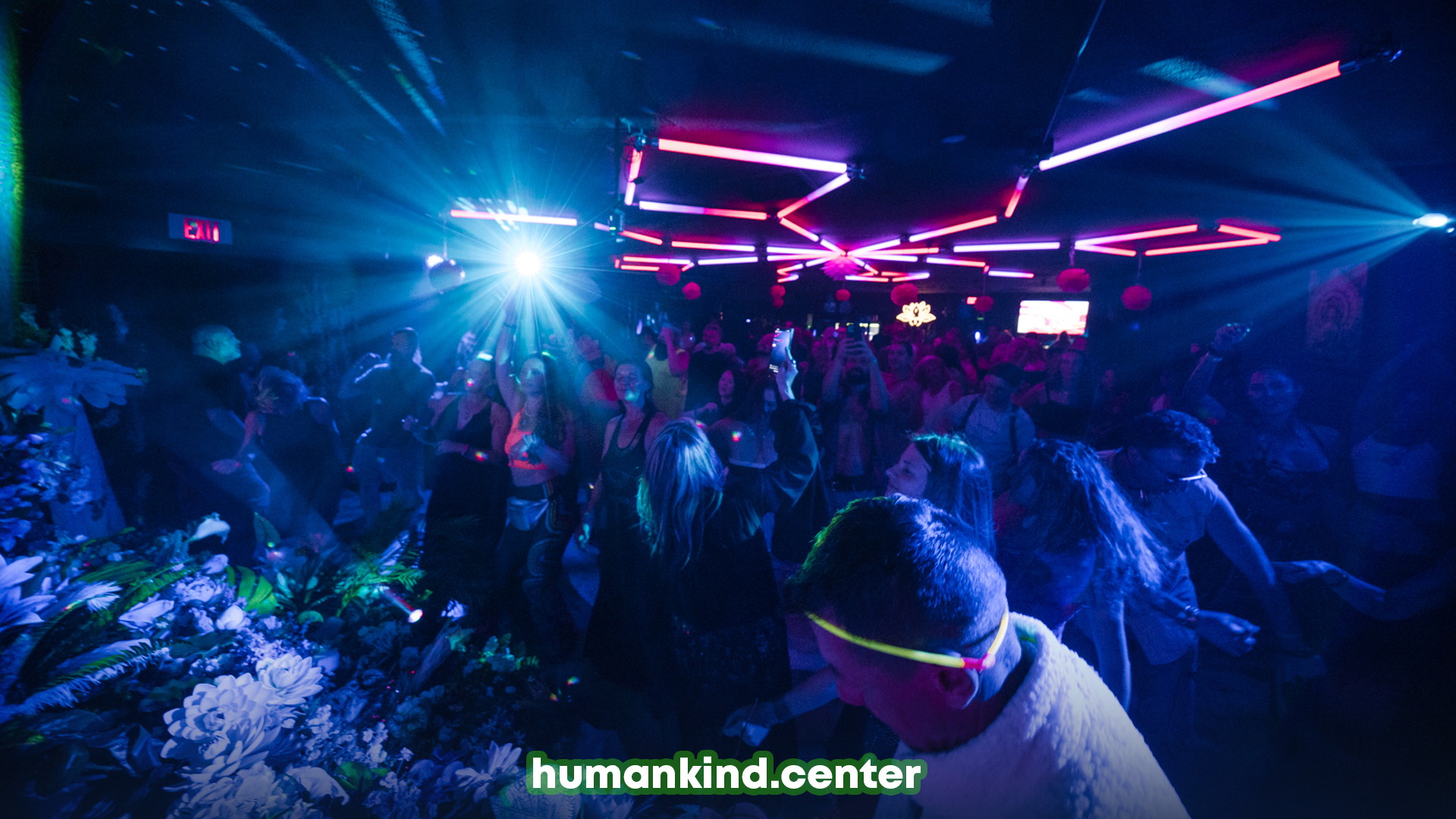
Expect to feel awkward for about seven minutes, and then forget you ever did. A typical ecstatic dance journey follows a musical arc — slow and grounding at the start, building into full-energy peaks, then gradually descending into something soft and integrative at the close. You don't have to do anything except show up and follow your own body's lead.
There are no partner requirements, no choreography, no mirrors, no grades. Most spaces ask you to remove shoes (floor connection is part of the magic), skip the alcohol, and hold off on conversation until after the music ends. You can find a deeper breakdown of what to expect — including local options — over at our guide to ecstatic dance in Sedona.
If you're in the red rock country and want to feel this for yourself, humankind's dance nights are a gorgeous place to start — a welcoming, body-forward community that holds the space with real care.
How Often Do You Need to Dance to Feel a Difference?
Even a single session can leave you feeling measurably different — lighter, more grounded, clearer in your thinking. But like any somatic practice, the cumulative effects are where things get really interesting. Regular free movers often report improvements in sleep, a lower baseline anxiety level, and a generally more comfortable relationship with their own emotional landscape.
There's no prescribed dose. Some people come weekly and make it a cornerstone of their wellbeing toolkit. Others drop in once a month and find that's exactly enough. The practice meets you where you are — which, honestly, is kind of the whole point.
- First 20 minutes: warm-up, inhibition dropping, rhythm finding you
- Middle of the journey: peak energy, emotional processing, full-body expression
- Cool-down: integration, stillness, that floaty post-dance glow
- After the music stops: optional gentle connection with other dancers, journaling, just lying on the floor feeling like a happy noodle
Your feelings aren't a problem to be managed. They're energy looking for movement. Give them a dance floor, and watch what happens.
Dance with us at humankind
Sedona's biggest conscious dance floor — ecstatic dance, DJs, and dance parties at humankind, all ages welcome.
Can't make it in person? Every event streams live and on demand in the humankind app.